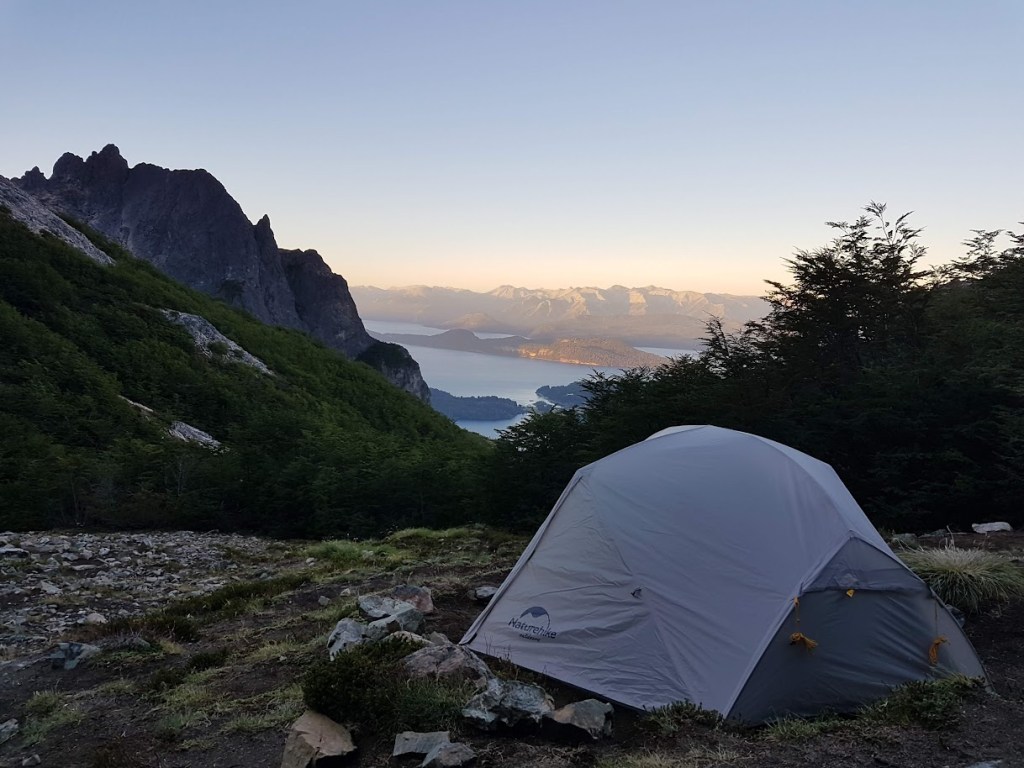
This 2 person tent was based on MSR Hubba Hubba, and I’ve been using in Brazil and Argentina since 2018!
It was put to test against strong winds in Patagonia and Mantiqueira, it was put under heavy rain in Ponta da Juatinga, and it never failed, but it has pros and cons like any product, and I’ll be very honest about them.
Where did I buy it?
I bought mine from NatureHike’s official store on AliExpress:
https://s.click.aliexpress.com/e/_oBjiUMp
You can also buy it from their official store on Amazon:
https://amzn.to/3xYjXS0
Weight
- Fabrics: 1185 grams (41,79 oz)
- Stakes: 554 grams (19,5 oz)
- Pegs: 89 grams (3,1 oz)
- Footprint: 235 grams (8,28 oz)
TOTAL without footprint: 1838 grams (64,83 oz)
TOTAL with footprint: 2063 grams (72,77 oz)
Fly sheet / outer tent
The seam-sealed rip-stop 20D Nylon has been very resistant to winds and storms throught all these years, I still didn’t need to patch it or reapply seam-sealer.
The manufacturer says it has a 4000 mm water column. Personally, I don’t know how to measure that, but I’ve never had problems with rain on this tent.
When I talk about winds, I’m specifically talking about the EXTREME winds that hit Laguna Negra (Argentina) and Itaguaré peak (Brazil).
Dorm / inner tent
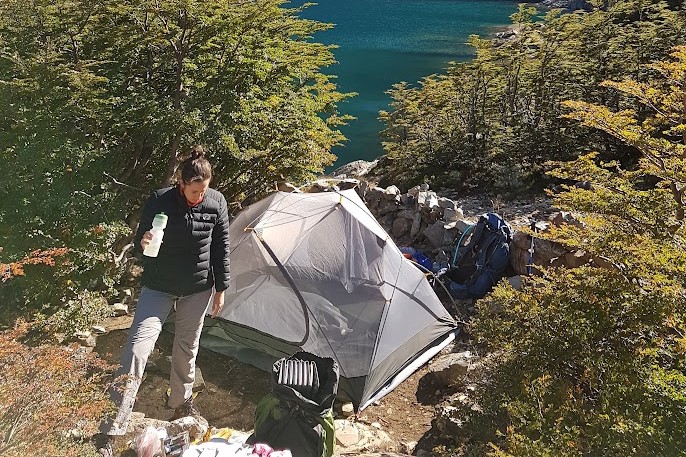
The dorm is huge, it fits 2 persons with their backpacks most of the time.
It has one pocket on each wall and also a very convenient detachable shelf on the “ceiling” that I personally love.
The walls are fully meshed, so they’re very breathable and I’ve never had problems with condensation inside the sleeping area (even though the fly sheet does get wet).
Some people complain that the winds might enter the tent, but personally, that never annoyed me because I use very good sleeping bags that break the wind.
Doors
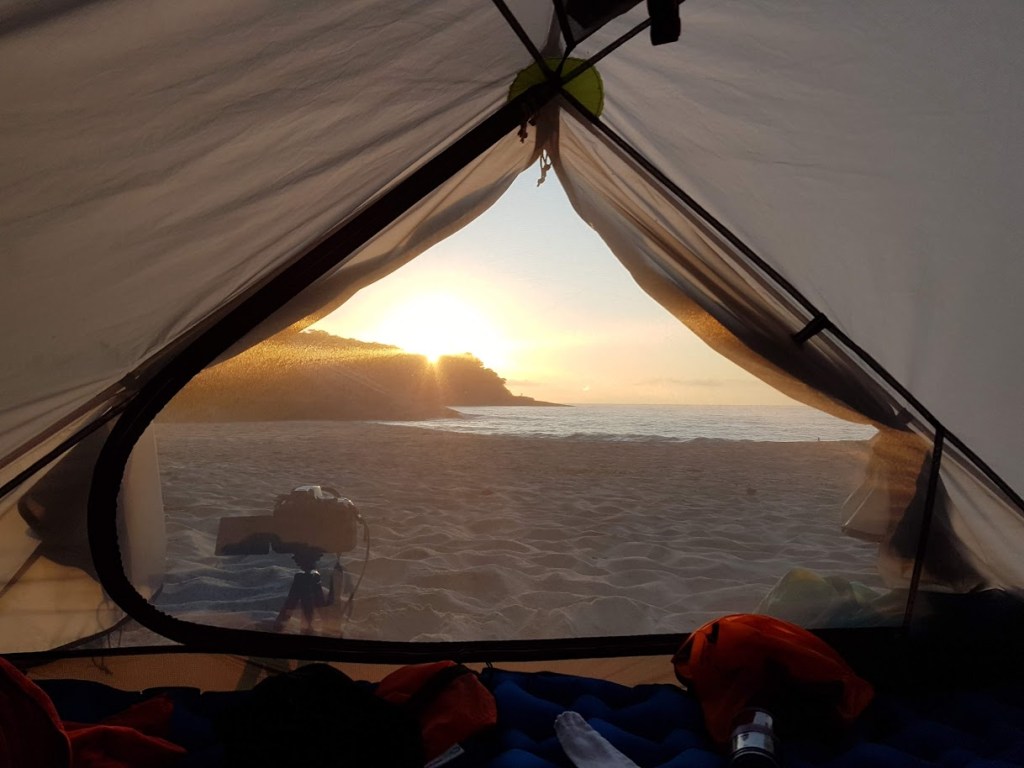
I love tents with doors on both sides because I hate having to jump over the other person to reach the outside at night, but another thing that I like about Mongar’s doors is that they can be opened to both sides, and that’s also handy when you need to increase ventilation or when you want to see a beautiful sunrise like the picture above.
Vestibules
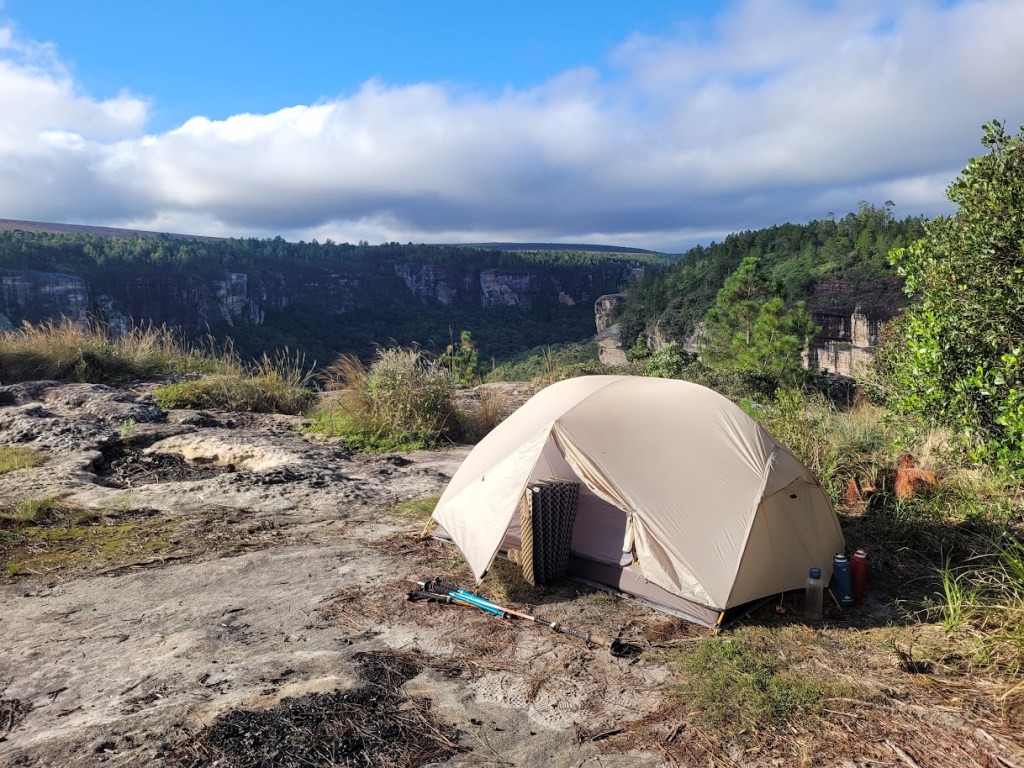
The vestibules (space in front of the doors) are also big enough to fit a whole backpack there. On the image below, you can see my Therm-A-Rest Zlite sitting comfortably inside my vestibule.
Stakes
Mongar’s stakes are sturdy, but also the heaviest part of the tent, and the main reason why it’s not as light as the MXR Hubba Hubba.
After years taking strong winds, my stakes got a bit bent but there’s no crack or dent. That’s expected for aluminum stakes.
Pegs
The pegs have a Y shape, they’re very light and efficient in most terrains except snow, their only flaw is that they bend easily because they’re aluminum. Having said that, I’ve never changed any of my pegs, they’re still the same that came when I bought the tent in 2018.
Fortunately, this is a self-standing tent so pitching it on rock is also possible if you use some creativity to stretch the fly sheet.
Conclusion
The NatureHike Mongar is not an ultralight tent, but it has a good quality-price ratio. For people like me, who live in underdeveloped countries, you just can’t find anything better and lighter even if you have the money to pay more, so I’m sure I’ll keep this tent for many more years.
If you’re coming to Brazil and want to try it out, book a hiking trip with me, I’m a certified trekking guide and I would love to show you around my country and lend you my best equipments.
As you can see…
I’m a very honest reviewer, I’m not a vendor, that’s why I’m pointing both the positive and negative aspects of this tent.
If you want to buy this tent and you want want to help keeping this blog alive, consider buying the tent from one of my affiliate links below:
– Amazon: https://amzn.to/3xYjXS0
– AliExpress: https://s.click.aliexpress.com/e/_AZlP0R
(this is not sponsored, anyone can make affiliate links)
 Hike Brazil
Deixe um comentário